Best Energy-Efficient Washing Machine 2026: Energy Star Models That Cut Utility Bills
When you buy through the Amazon links on this page, we may earn a commission at no extra cost to you. Learn more
Last updated October 31, 2026
The Black+Decker BFLW45M is the energy-efficient washing machine most US households should start with: an Energy Star certified front loader with a 4.5 cu ft drum, a 1300 RPM top spin and five wash temperatures, so the two levers that actually move a utility bill, cold water and fast extraction, are both in reach.
A front loader tumbles clothes through a shallow pool instead of submerging them, which is why the type uses roughly 45 to 50% less energy and water than a top-load agitator. The Kenmore 2642272 adds steam for stain and hygiene loads, and the LG WM4200HWA pairs a 5.0 cu ft drum with a published 105 kWh per year.
The best energy-efficient washing machines of 2026

Black+Decker BFLW45M front load washer
See on Amazon
Kenmore 2642272 front load washer
See on Amazon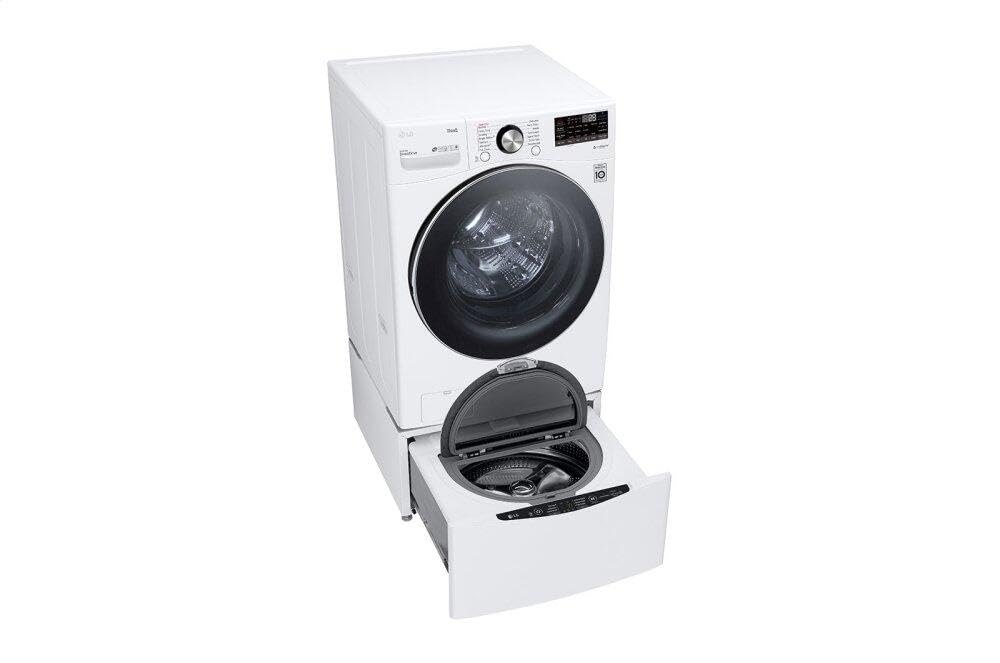
LG WM4200HWA front load washer
See on AmazonModel comparison
| Model | Price | Rating | Capacity | Weight | Voltage | Best for | |
|---|---|---|---|---|---|---|---|
| | Black+Decker BFLW45M front load washer | $1,029.99 as of 10/31 See on Amazon | ★ 4.4 (9,300+ ratings) | 4.5 cu ft | 216.1 lb | 120 V | Queen comforter owners get a 4.5 cubic feet front load drum with a Bulky/Sheets cycle. |
| | Kenmore 2642272 front load washer | $1,376.55 as of 10/31 See on Amazon | ★ 4.1 (100+ ratings) | 4.5 cu ft | 216.1 lb | not stated | Households with heavy soiling, kids' clothes or allergy concerns get hygiene steam and a sanitizing rinse at 4.5 cubic feet. |
| | LG WM4200HWA front load washer | $1,484.00 as of 10/31 See on Amazon | ★ 4.7 (4 ratings) | 5.0 cu ft | 201.5 lb | 120 V | Allergy-conscious households washing comforters and sheets often get TurboWash 360°, Steam Wash, the Allergiene cycle and a 1,300 RPM spin. |
What Energy Star and the yellow EnergyGuide label actually tell you
Read the kWh-per-year figure first on the yellow EnergyGuide label, the estimated yearly cost second, and the badge last.
The kWh-per-year figure is a comparison tool, not a prediction
The annual kilowatt-hour figure on the label is an estimate built on a fixed assumption about how many loads a household runs in a year and on a national average electricity price. It exists so you can hold two labels side by side, not so you can forecast your own bill. Compare only within the same capacity class: standard machines of 1.6 cu ft and up are rated on one basis, compact machines under 1.6 cu ft on another, and a compact label next to a full-size label tells you nothing useful.
The estimated yearly cost is the kWh figure at a national average rate
The dollar figure printed beside the kWh number is that same estimate multiplied by a national average electricity price. If your utility charges more than the average, your real cost runs higher; if it charges less, lower. The label also prints a second estimate for homes with a natural gas water heater, because part of the energy then lands on the gas bill instead.
IMEF rewards a machine that spins clothes dryer
The Integrated Modified Energy Factor, or IMEF, is the more complete metric, and higher is better. It folds in the machine's own electricity, its standby draw, the energy used to heat the water, and the dryer energy implied by how much moisture the spin leaves behind. That last part is why two machines with similar kWh-per-year figures can still differ in real running cost: the one that extracts more water hands the dryer a lighter load.
IWF measures water per cubic foot of drum
The Integrated Water Factor, or IWF, is water used per cycle per cubic foot of drum capacity, and lower is better. Because it is expressed per cubic foot, it lets you compare a large drum against a small one fairly, which a plain gallons-per-year figure cannot do.
The federal floor and the Energy Star threshold
Federal minimums set the line between a machine that may legally be sold and one that may not. For a standard front loader the current floor is an IMEF of 1.84 and an IWF of 4.7; for a standard top loader it is 1.57 and 6.5. Energy Star certification sits above that floor, requiring an IWF of 4.3 or lower among other criteria. Certification is therefore a threshold, not a ranking: two certified machines can sit far apart on the same scale.
The label's blind spot is moisture
Nothing on the yellow label tells you how much water is left in the clothes at the end of the cycle, and drying is where most of the energy in doing a load of laundry actually goes. A machine that spins harder can be the more efficient purchase even when its kWh-per-year figure matches a rival's. When you compare two labels, check the spin speed on the spec sheet as well.
The metrics are changing in 2026
New federal standards take effect on March 1, 2026, and with them new metric names: energy efficiency ratio in pounds per kilowatt-hour per cycle, and water efficiency ratio in pounds per gallon per cycle, both higher-is-better. IMEF and IWF will be retired. A label you read today is accurate for today's stock, but it is not the permanent vocabulary of the category.
How front-loading cuts your water and power use
The difference between the two designs is not a matter of tuning. It comes from how each one gets water onto the fabric, and everything else follows from that.
Tumbling versus agitating
A front loader lifts clothes to the top of a horizontal drum and lets them fall back through a shallow pool of water, then rinses by spraying. A top-load agitator submerges the whole load in a full tub and drags it through the water with a central fin. A high-efficiency top loader with an impeller sits between the two: it uses less water than an agitator but moves clothes with a low paddle rather than a full tumble.
Water per load by type
The gap is large. A front loader uses roughly 10 gallons per load, a high-efficiency top loader about 13 gallons, and a top-load agitator around 20 gallons. Over a year of regular washing that difference adds up to thousands of gallons.
Less water means less water to heat
Water heating is the dominant cost of a wash cycle, so a machine that uses half the water is also heating half the water. The water saving and the energy saving are the same saving counted once, which is why the two figures move together on every label.
Faster spin, lighter dryer load
Front loaders spin faster than top loaders, extract more water, and hand the dryer clothes that need less time and heat. Drying accounts for the majority of the energy used in cleaning a load of laundry. A washer that costs slightly more to buy but leaves clothes dryer can be the cheaper machine to own.
The size of the advantage
Measured against a top-load agitator, a front loader uses on the order of 45 to 50% less energy and water. Against an impeller top loader the advantage is about 25%. Those are type-level figures, and they are the first decision to make.
Choosing within a type matters too
Choosing front load gets you into the efficient category; choosing a good front loader gets you to the bottom of it. The second decision is made on the label and the spec sheet.
Where the energy goes in a wash cycle
Most of a washer's electricity never reaches the motor. It goes to the heating element that warms the water, which is why the settings that change water temperature change the bill far more than anything else you can touch.
The split
Roughly 80 to 90% of a washer's energy goes to heating the water. The motor, the controls and the spinning account for the small remainder. Washers and dryers together make up around a tenth of a home's total energy use, so the laundry line on your bill is mostly a water-heating line.
Temperature is the dominant lever
Dropping a wash from hot to warm roughly halves its energy use. Dropping further to cold cuts it by well over half again. That effect is why cold washing is the first habit to build and the last one to give up.
Cycle length is a weak proxy
A long cold cycle can use less energy than a short hot one. Judging a machine by how many minutes its normal cycle runs tells you almost nothing about what it costs, and choosing a shorter cycle over a cooler one usually costs you money.
The dryer's share
Drying accounts for the majority of the energy used in cleaning a load of laundry. That is why spin speed and load size matter as much as the wash settings: a faster spin and a full drum both reduce the work the dryer has to do, and the dryer is where the biggest single block of energy sits.
Settings and habits that cut energy use without hurting cleaning
Wash cold by default
Run everything cold unless a load is genuinely soiled or hygiene-critical. Reserve hot and sanitize cycles for bedding during illness, cloth diapers, or grease-heavy work clothes. This is the single biggest saving available on any washer, and modern detergents are formulated to work in cold water.
Spin as fast as the fabric allows
Set the highest spin speed the load can take. The extra motor energy a fast spin draws is trivial next to the dryer energy it saves, and the difference shows up on the next machine in the chain rather than on this one.
Know what eco modes trade away
Eco and cold-wash modes lower the temperature and extend the cycle, so they save energy but not time. A two-hour eco cycle is normal, not a fault. If you need the load back quickly, a shorter cycle at a lower temperature beats a fast cycle at a high one.
Fill the drum, but do not stuff it
Run full loads, and stop short of packing the drum. A large drum run half-full is the most expensive way to do laundry, because you pay the per-load water and heating cost for a partial load. Match the drum to your real weekly volume rather than to the biggest load you wash once a year.
Dose the detergent to the load
Use high-efficiency detergent in a high-efficiency machine, and dose it to the load size and your water hardness. Too much detergent in a low-water wash leaves residue on fabric, which leads to a second wash, and a second wash erases the saving entirely.
Keep a front loader dry and clean
Leave the door ajar between loads and run the machine's cleaning cycle as the manufacturer directs. A front loader that develops odor gets re-washed, and re-washing is an efficiency loss that no label accounts for.
Our picks by budget
The Black+Decker BFLW45M is our budget pick because it buys the type advantage itself, a tumbling front loader with a 1300 RPM spin and five wash temperatures, rather than extra cycles that do not change what the machine costs to run.
The Kenmore 2642272 is our mid-range pick because the extra money goes into steam and cold-clean cycles that let a household stop reaching for hot water on problem loads, which is where the saving is preserved.
The LG WM4200HWA is our premium pick because it states its annual energy consumption at 105 kWh per year and pairs it with a 5.0 cu ft drum, so a household that washes often can see the running cost before buying.
Budget
Mid-range
High-end
Which energy-efficient washing machine for which buyer
Matching the machine to how you actually do laundry matters more than the gap between one certified model and another.
Lowest running cost, least spend
The Black+Decker BFLW45M delivers the front-load water and spin advantage, with a 1300 RPM spin and five wash temperatures, without paying for features that do not affect the bill.
Stains, allergies and kids' laundry
The Kenmore 2642272 adds Hygiene Steam, a stain-removing steam treatment and a Cold Clean cycle, so problem loads get treated without defaulting to hot water for everything.
Large household replacing a top-loader
The LG WM4200HWA pairs a 5.0 cu ft drum with a published 105 kWh per year, which suits a high weekly load count and means fewer part-full loads.
Our verdict on the best energy-efficient washing machines
For most US households the efficient choice is a front loader washed cold with a high spin, and the Black+Decker BFLW45M is the machine that delivers that combination with the least spent on features that do not touch the bill. The Kenmore 2642272 is the better fit for a home with stains, allergies or kids' laundry, where steam and cold-clean cycles keep problem loads out of hot water. The LG WM4200HWA suits a large household that washes often, with a 5.0 cu ft drum and a stated 105 kWh per year. The honest limit is the same for all three: the machine is maybe half the saving, and temperature, spin speed, load size and the dryer are the other half.
Detailed model analysis
A washer's efficiency lives in three places on the spec sheet: the certification, the maximum spin speed and the range of wash temperatures.
Black+Decker BFLW45M front load washer
The Black+Decker BFLW45M is an Energy Star certified front loader with a stainless steel drum that holds 4.5 cu ft. A Bulky/Sheets cycle covers larger bedding loads.
It spins up to 1300 RPM, and 5 spin settings let you adjust extraction. With 5 wash temperature settings, you can pick cooler water when a load allows.
It runs 12 standard cycles, including Quick Wash, Sanitize, Delicates, Baby Care, Sportswear and Tub Clean. MyCycle saves the program you use most, and delay start runs up to 24 hours.
It measures 34 in deep, 27 in wide and 39.8 in high, and weighs 216.1 lb. It plugs into a grounded 120 V outlet.
The limits are practical. It takes HE detergent only and needs both hot and cold water at 10 to 120 psi. The warranty is 1 year limited.
Plumbing matters too: the drain must move about 17 gallons per minute (64.3 L), and the standpipe must be at least 1.25 in wide and 24 to 47.24 in above the floor.
- Brand: Black+Decker
- Capacity: 4.5 cu ft
- Voltage: 120 V
- Dimensions: 34 in deep, 27 in wide and 39 in high
- Weight: 216.1 lb
- Wash cycles: 12
Kenmore 2642272 front load washer
The Kenmore 2642272 front load washer is Energy Star certified and adds Hygiene Steam to a 4.5 cu ft stainless steel drum.
A Steam Treat option removes tough stains with steam, and Accela Wash reduces wash time for everyday loads. Cold Clean, Sani Rinse, Kids Wear and Clean Washer cycles are also included.
It offers 12 standard cycles, including Express, Delicates, Whites, Bulky, Heavy Duty and Towels. Knob and touch controls show wash status on an LED display.
It weighs 216.1 lb and has a steel cabinet. Dispensers take bleach, detergent and fabric softener. The box adds an instruction manual, a drain hose guide, a cable tie and two inlet hose screen washers.
Its limits are clear: the drum holds 4.5 cu ft, it is for residential use only, and the warranty is one year on the appliance.
It suits households with heavy soiling, kids' clothes or allergy concerns who want steam and a Sani Rinse.
- Brand: Kenmore
- Capacity: 4.5 cu ft
- Dimensions: 34.02 in deep, 27.01 in wide and 39.6 in high
- Weight: 216.1 lb
- Loading type: Front load
- Special feature: Hygiene steam
LG WM4200HWA front load washer
The LG WM4200HWA is Energy Star certified and lists 105 kWh per year of energy use. Its 5 cu ft stainless steel drum fits king-size bedding, towels and bulky loads, so you run fewer cycles.
TurboWash 360° technology delivers faster cleaning times. Steam Wash and an Allergiene cycle target allergens, and the washer meets AAFA requirements.
It spins up to 1300 rpm and offers 14 washing cycles, against 12 standard cycles for the Black+Decker BFLW45M and the Kenmore 2642272. A LoDecibel motor with vibration reduction keeps it quiet.
SmartThinQ Wi-Fi gives you remote control and cycle notifications, and works with voice assistants. A 4 tray dispenser with Smart Grid handles detergent. A child safety lock is included.
The main limit is space. With the door open it needs 53.25 in of depth, so measure your laundry room first. The warranty is 1 year limited.
It suits allergy-conscious households washing comforters and sheets who want a larger drum, steam and Wi-Fi in an Energy Star washer.
- Brand: LG
- Capacity: 5.0 cu ft
- Max spin speed: 1300 rpm
- Voltage: 120 V
- Dimensions: 33.25 in deep, 27 in wide and 39 in high
- Weight: 201.5 lb
Frequently asked questions
Most questions about efficient washers come down to whether the label can be trusted and whether the saving is real.
Are front-load or top-load washers more energy efficient?
Front loaders are, by roughly 45 to 50% against a top-load agitator and about 25% against an impeller top loader. The gap comes from water volume: a front loader heats only the small pool it needs, so the energy tied to warming water drops sharply per cycle.
How much does an energy-efficient washing machine cost to run per year?
Electricity runs a modest amount a year at typical US rates, and the exact figure depends on your utility's rate and how many loads you run each week. Water and sewer charges come on top and are billed separately, so the true running cost is higher than the electricity figure alone.
What do IMEF and IWF mean, and which is better?
IMEF, the Integrated Modified Energy Factor, is higher-is-better and folds in the machine's electricity, standby draw, water heating and the drying work saved when the spin extracts more moisture. IWF, the Integrated Water Factor, is lower-is-better and scales water use to drum size, so a 5.0 cu ft drum and a 4.5 cu ft drum can be judged on the same scale. Certification sits above the legal minimum, so a certified machine clears the federal floor by a margin, but the badge alone does not tell you how much better one certified model is than another.
Does washing in cold water really save energy?
Yes. Water heating accounts for 80 to 90% of a cycle's energy, so going from hot to warm roughly halves the energy used, and dropping the temperature further saves more again. Cycle length barely matters by comparison. Cycle length barely matters by comparison.
Is an energy-efficient washer worth the extra money?
Electricity savings alone rarely repay a large price premium over the life of the machine. The return comes from the combination: lower water and sewer bills, less dryer energy because of the faster spin, and any utility or water-district rebate collected at purchase.
Are there rebates for energy-efficient washers?
Yes, commonly offered by utility companies and water districts, with the amount set by the program and the efficiency tier reached. Many programs require the top efficiency tier rather than plain certification, and some set their own maximum water factor, so check the program's terms before choosing a model.
Do energy-efficient washers clean as well?
Efficiency and cleaning can trade off if you let them. Cold cycles, detergent dosed to the load and water hardness, and a drum that is full without being packed all protect wash performance, and steam or hygiene cycles handle the loads that genuinely need more than cold water.